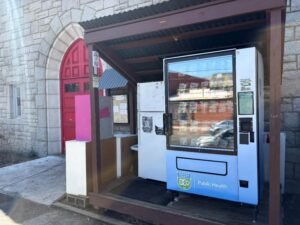

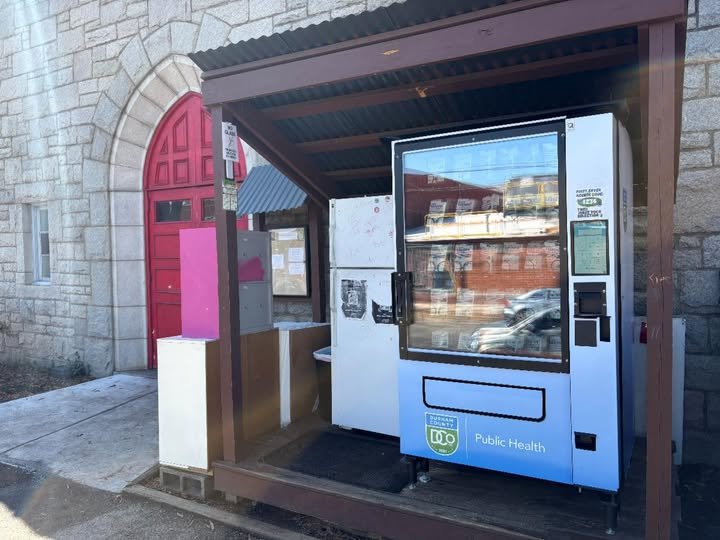
In a quiet but consequential move, a Durham church has become the latest site in the county’s escalating effort to combat opioid overdoses.
Durham County officials announced Monday that a new naloxone vending machine has been installed at a local church, expanding free public access to the life saving medication that can reverse opioid overdoses within minutes. The initiative is part of a broader harm reduction strategy aimed at lowering overdose deaths in a city that has not been spared from the national opioid crisis.
County leaders say placing the machine at a church reflects a deliberate effort to meet people where they are.
A Public Health Emergency Close to Home
Opioid overdoses remain one of the leading causes of accidental death in North Carolina. According to the North Carolina Department of Health and Human Services, thousands of residents statewide die each year from drug overdoses, with fentanyl driving a sharp rise in fatalities over the past decade.
Durham County has experienced its share of those losses. Public health data show that overdose calls for service and emergency department visits have strained first responders and hospitals alike. County officials have increasingly leaned into harm reduction strategies, including the distribution of naloxone kits, syringe exchange programs and community outreach initiatives.
Naloxone, often sold under the brand name Narcan, is a medication that can rapidly reverse the effects of an opioid overdose by binding to opioid receptors in the brain. It is safe to administer and has no effect if opioids are not present in a person’s system.
Making it available without barriers is the goal.
Why a Vending Machine
Vending machines stocked with naloxone have emerged across the country as a low stigma, high accessibility solution. They allow individuals to obtain the medication anonymously and at no cost, often 24 hours a day.
Durham County’s decision to place one inside or adjacent to a church underscores an evolving partnership between public health agencies and faith based institutions. Churches have long played a central role in Durham’s civic life, serving as hubs not only for worship but for food drives, housing assistance and community advocacy.
By hosting the machine, the church signals that overdose prevention is not a fringe issue but a community responsibility.
The Data Behind the Decision
The Centers for Disease Control and Prevention reports that nationwide opioid related deaths surged during the pandemic years, with synthetic opioids such as fentanyl accounting for the majority of fatalities. While some recent data suggest modest stabilization in certain regions, public health officials warn that the crisis remains acute.
North Carolina has expanded standing orders that allow naloxone to be dispensed without a patient specific prescription. Statewide campaigns have emphasized that anyone can carry and administer naloxone, not just medical professionals.
Durham County officials say increased distribution correlates with reduced fatality rates. When naloxone is available quickly, survival odds improve dramatically.
Meeting People With Compassion
Critics of harm reduction strategies have sometimes argued that broad naloxone distribution enables drug use. Public health experts overwhelmingly reject that claim, noting that the medication does not treat addiction itself but prevents death, allowing individuals the chance to pursue recovery.
County leaders have framed the vending machine not as an endorsement of substance use but as a recognition of reality. Opioid addiction cuts across race, income and neighborhood lines. In Durham, families from every ZIP code have felt the impact.
Faith communities have increasingly joined the effort, recognizing overdose prevention as aligned with missions of service and compassion.
What Happens Next
The new vending machine is expected to be monitored and restocked regularly. County officials have not ruled out expanding the program to additional sites if demand warrants.
For Durham, the installation represents another step in a broader public health pivot. The strategy acknowledges that enforcement alone has not stemmed overdose deaths. Access to lifesaving medication, education and treatment pathways are central pillars moving forward.
The Bull City Citizen will continue to track Durham’s response to the opioid crisis, including data trends, funding allocations and the impact of harm reduction programs across neighborhoods.
In a city that prides itself on innovation and community care, a naloxone vending machine inside a church is both symbolic and practical. It says that saving lives is not controversial. It is necessary.